Grain, Trade, and Strategy: The Iberian Silos Beneath Sitges, Catalonia
Where the Town Began Underground
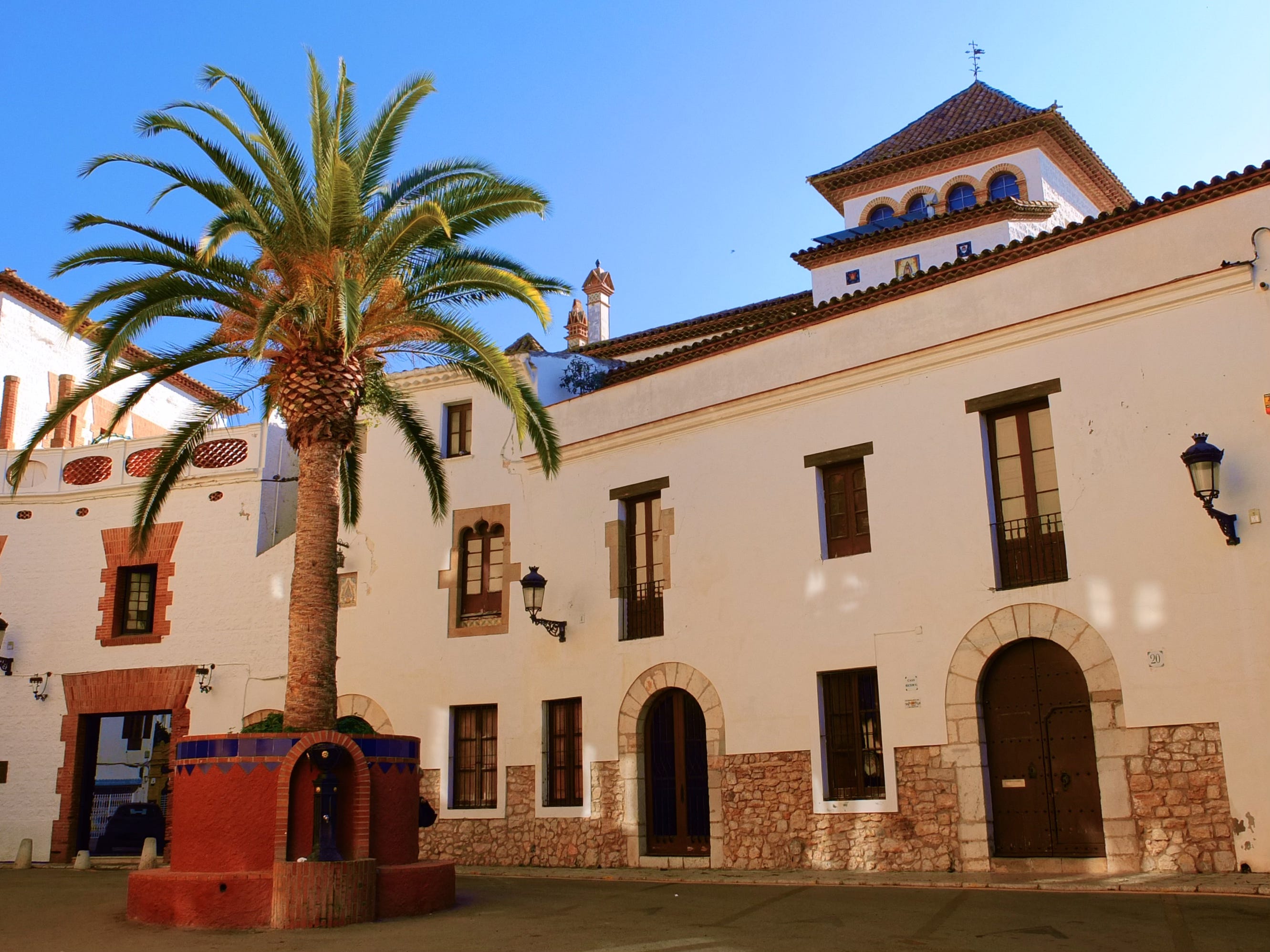
Casa Rectoral Historic Gothic Stone Facade in Sitges Print
Beneath the historic core of Sitges lies evidence of an early settlement whose significance extended well beyond local subsistence. The archaeological site of the Poblat ibèric de Puig de les Sitges reveals a community structured around agricultural storage, surplus management, and regional exchange—key indicators of an emerging commercial hub in the northwestern Mediterranean during the 4th century BC.
Architectural Heritage: Exploring the Historic Casa de la Vila in Sitges Print
At the centre of this system were the sitges: deep cylindrical silos excavated directly into the limestone bedrock, especially noticeable in the bedrock exposures around Plaça de l’Ajuntament and in the vicinity of the Church of Sant Bartomeu—areas that were naturally defensible and likely favoured for settlement and storage alike. These subterranean structures were designed for the long-term storage of grain, a commodity that functioned as both sustenance and economic capital in Iberian society. Their scale and distribution suggest not merely domestic use but organised accumulation: an essential prerequisite for participation in broader exchange networks.
Medieval Echoes The Timeless Stone Walls of Casa Rectoral Print
The existence of such storage infrastructure implies that Sitges occupied a strategically advantageous position. Located near the coast yet connected to inland routes, the settlement acted as an intermediary between agricultural producers of the interior and maritime trading corridors of the Mediterranean. Grain stored in these silos could be redistributed locally, exchanged with neighbouring communities, or exported via coastal trade, linking Sitges to wider economic circuits that included Phoenician and Greek spheres of influence before Roman hegemony.
Medieval Masonry Exploring the Historic Walls of Casa Rectoral in Sitges Print
While the Roman conquest ultimately reconfigured regional trade, establishing Tarraco (modern Tarragona) as a central hub that integrated smaller coastal settlements into the villa economy and more formalised supply systems, the peak of Sitges’ independent exchange activity predates this transition. With the Romanisation of the region, many formerly autonomous coastal nodes were subsumed into a network that privileged larger administrative centres, fundamentally altering patterns of production, distribution, and mobility.
Sitges Spain Iberian Settlement Print
Archaeological parallels across the Iberian Peninsula reinforce this interpretation. Similar silo complexes are consistently associated with settlements that exercised economic control over surrounding territories and functioned as nodal points within prehistoric trading networks. In this context, Sitges was not an isolated village but a strategically positioned settlement deeply embedded in the dynamics of Mediterranean exchange.
Sitges, Spain Tropical Greenery Fine Art Print Mediterranean White Architecture
The visible remnants—the circular depressions and storage pits cut into the rock—represent only the physical outlines of a sophisticated economic system. These venues imply coordinated labour, knowledge of preservation techniques, and an understanding of surplus accumulation as a form of social and economic leverage. Control over stored grain allowed local elites to regulate trade flows, manage the community through lean seasons, and negotiate exchange relationships with external partners.
Medieval Masonry Exploring the Historic Walls of Casa Rectoral in Sitges Print
Set within the dense urban fabric of Sitges’ old quarter, the silos stand in silent contrast to later architectural phases shaped by defence, religion, and leisure. Yet the logic of place remains consistent: the geographic advantages that once facilitated Iberian trade continue to define Sitges’ relationship with the Mediterranean today.
Sitges Town Hall Print Casa de la Vila Spain Historic Architecture Colour Fine Art Photography
Viewed in full colour, the weathered limestone and carefully cut cavities emphasise durability over monumentality. These were functional spaces, optimised for economic resilience rather than symbolic display. Their survival underscores the continuity of human occupation in Sitges and highlights commerce as foundational to the town’s long-term development.
Palm Trees and Historic Architecture of Church of Sant Bartomeu in Background Print
Ultimately, the sitges beneath Sitges remind us that the town’s origins were economic before they were aesthetic. Long before Sitges became a destination of artistic and cultural renown, it was a site of storage, exchange, and strategic connection—a place where grain linked land to sea, and local production touched the wider Mediterranean world. Until next time! Thanks for reading…