The Art of Resistance and Imagination: A Journey Through the Polish Poster Tradition
Exploring the Evolution, Influence, and Enduring Power of Graphic Expression at the Poster Museum in Wilanów
My recent visit to the Poster Museum in Wilanow felt like much more than a simple encounter with graphic design. I found myself immersed in one of the most intellectually rich and visually distinctive artistic traditions of the modern era. While the Polish poster is often underestimated outside specialist circles, it revealed itself to me as a profound cultural artefact that is part fine art, part political commentary, and part national chronicle. As I walked through the exhibition, I sensed immediately that this was not merely a display of printed works but a carefully constructed narrative of resilience, imagination, and identity.
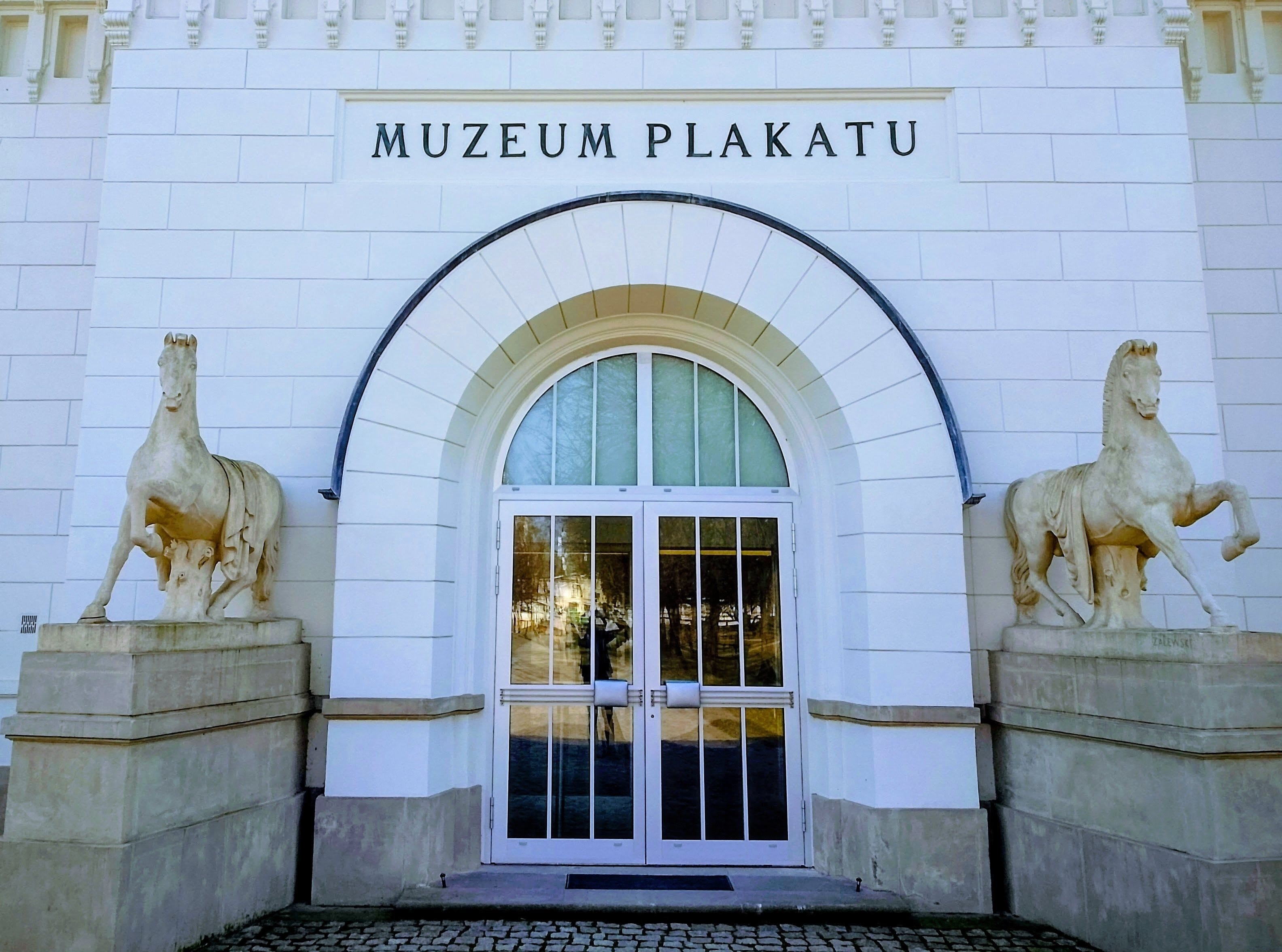
The museum itself, situated in the historic district of Wilanow in Warsaw, provided a fitting setting for my exploration. I found something almost poetic about encountering such a modern and often subversive art form within a context steeped in aristocratic heritage. This contrast heightened my experience because the polished stillness of the surroundings seemed to amplify the urgency, wit, and emotional charge of the posters. Each room invited me to go beyond observation and reflect on the connections between aesthetics and history, or between individual artists and broader societal shifts.
I found that the exhibition Polish Posters The Collection is curated with a sense of chronology that feels both logical and alive. Rather than following a static timeline, I felt guided through evolving artistic responses to changing political and cultural landscapes. What emerged for me was a story not just of design evolution, but of how a medium can become a vehicle for national expression under conditions that were often anything but free.
The early foundations of the Polish poster, spanning roughly from 1892 to 1917, struck me with their quiet determination. During this period, Poland did not exist as an independent state because it had been partitioned among neighbouring powers. Yet within this context of political absence, I saw how cultural identity found expression in unexpected places, including the poster. Artists like Stanislaw Wyspianski and Jozef Mehoffer, who were already established in painting and decorative arts, turned to poster design not as a lesser form but as a true extension of their artistic language.
Viewing these early works in the exhibition, I was struck by their synthesis of influences. I saw clear echoes of Art Nouveau, with its flowing lines and ornamental richness, but I also felt a distinct sensibility rooted in Polish symbolism and folklore. To me, these posters do not merely advertise. Instead, they evoke. I could feel a sense of longing and continuity within them, as if they functioned as cultural anchors during a time of fragmentation. The milestone exhibition held in Krakow in 1898, which the museum narrative references, took on new significance for me in this light. It became more than just a display of international talent; I saw it as a bold assertion of the place of Poland within a broader artistic dialogue.
As I moved into the interwar period from 1918 to 1939, I noticed the tone shift significantly. With the re establishment of Poland as an independent nation after World War I, I watched the poster take on new roles and energies. I think the exhibition captures this transition beautifully by juxtaposing works that reflect state building efforts with those that embrace the burgeoning world of consumer culture.
In this part of the exhibition, I saw the poster become both a tool of persuasion and a site of experimentation. I encountered designs promoting national loans, infrastructure projects, and civic initiatives, which felt like visual manifestations of a country in the process of defining itself. At the same time, I noticed a growing sophistication in commercial advertising. The famous 1928 Gentleman poster by Tadeusz Gronowski stood out to me as a defining example. Its elegance and clarity suggested a designer fully attuned to modernist principles, yet I still sensed an underlying playfulness that prevented it from becoming purely functional.
What I found particularly compelling about this section was the sense of optimism it conveyed. I could feel a palpable belief in the works on display that design can shape perception and behavior in meaningful ways. These posters felt confident, forward looking, and often strikingly modern. However, this optimism was shadowed by my own historical hindsight as I moved through the gallery knowing what was to come.
I felt that the devastation of World War II marked a rupture not only in the political and social fabric of Poland but also in its artistic trajectory. I noticed the exhibition handles this transition with sensitivity, allowing me space to feel the weight of loss before introducing the remarkable resurgence that followed. It was in the post-war period, particularly between 1949 and 1964, that I saw the Polish poster achieve what many consider its golden age.
To me, the emergence of the Polish School of Posters is nothing short of extraordinary. In a political environment defined by censorship and ideological control, I saw how artists found ways to carve out a space for creative freedom within the seemingly restrictive framework of poster design. I believe the key to this paradox lies in the nature of the commissions themselves. Film posters, in particular, became a fertile ground for innovation in my eyes. Rather than simply reproducing images from the films they promoted, I observed that artists were given a degree of interpretive latitude that allowed them to transform these assignments into deeply personal works of art.
As I stood before these posters in the museum, the difference was immediately apparent to me. I noticed they are not literal but suggestive, relying instead on metaphor, abstraction, and visual wit. To my eyes, a single image could encapsulate an entire narrative, inviting me to engage actively in the process of interpretation. I found that the works of artists such as Wojciech Fangor exemplify this approach, blending painterly techniques with graphic clarity to create compositions that I found both intellectually stimulating and visually arresting. I also sensed a dialogue within this period—a conversation between artists, between influences, and between the individual and the collective. Despite operating within a state controlled system, I saw how these designers managed to develop distinct voices. The exhibition highlights this diversity for me, presenting a range of styles that nonetheless share a common commitment to originality and depth.
One of the most fascinating aspects of this era for me was the way in which limitations became catalysts for innovation. I realized the scarcity of materials, the constraints on content, and the broader atmosphere of control all contributed to a creative environment in which indirect expression became a necessity. To my mind, the poster, with its combination of text and image, proved ideally suited to this mode of communication. I saw how it could hint, allude, and provoke without stating explicitly, making it a powerful tool for both artistic and subtle political expression.
As I watched the exhibition move into the latter half of the 20th century, from 1965 to 2022, I found the narrative becoming more complex and fragmented, reflecting broader global and local changes. I could clearly see the influence of international movements like Pop Art and Op Art in the bold colours, optical effects, and playful imagery of the 1960’s and 70’s. Yet, even as I saw Polish designers engage with these trends, I noticed they retained a distinct identity, avoiding mere imitation in favour of their own reinterpretation.
The 1980’s introduced a more overtly political dimension for me. I watched the rise of the Solidarity movement transform the poster once again, this time into a symbol of resistance and collective action. The works from this period featured in the exhibition carried a raw immediacy that I found striking. They seemed less concerned with formal perfection and more focused on impact. To my eye, the typography became more urgent, the imagery more direct, and the overall tone much more confrontational.
Standing before these posters, I could not help but feel the intensity of the moment they represent. To me, they are not just historical artifacts but echoes of lived experience and visual testimonies to a society in the midst of profound change. I felt the exhibition did an excellent job of contextualizing these works, providing me with enough background to understand their significance without overwhelming me with information.
In the contemporary section, I saw the Polish poster reveal its continued relevance. Far from being a relic of the past, it felt like a dynamic and evolving medium. I realized that while today’s designers operate in a vastly different environment shaped by digital technologies and global networks, many of the core principles of the tradition endure. I still noticed an emphasis on concept, the interplay between text and image, and the potential of the poster as a form of commentary.
I found that what has changed, perhaps, is the nature of the audience and the modes of distribution. In the internet age, I noticed that posters are no longer confined to physical spaces. They circulate widely online, reaching audiences far beyond their original context. I felt this shift presents both opportunities and challenges. On one hand, I see how it allows for greater visibility and accessibility. On the other, it raises questions for me about the materiality of the poster and the experience of viewing it in situ.
This brought me to an important aspect of my visit, which was the consideration of how such works can be brought into personal spaces. I felt the exhibition subtly bridged the gap between the museum experience and a private collection, inviting me to think about the role of art in my own environment. To me, the idea of reproducing Polish posters for home display is not merely a commercial proposition but an extension of the tradition itself.
In this context, the importance of quality became paramount to me. As I saw in the museum, the original posters possess a richness of colour, texture, and detail that is integral to their impact. I believe any reproduction must strive to preserve these qualities as faithfully as possible. This is where I see services like Fine Art America come into play, offering museum quality prints that adhere to professional standards.
I found that the use of archival inks and premium materials ensures that reproductions maintain their vibrancy over time, allowing me and other collectors to experience something close to the original works. The availability of different formats, from paper to canvas, provides me with flexibility in how these pieces can be integrated into various interior settings. Moreover, I noticed how the global network of production centres enhances accessibility, making it easier for individuals around the world to engage with this artistic heritage.
I found that the guarantee of satisfaction further lowers the barrier to entry, particularly for those new to collecting. To me, it reflects a broader democratisation of art, where high quality reproductions make historically significant works available to a wider audience. In a sense, I feel this echoes the original function of the poster as a public medium, which was art designed to be seen, to communicate, and to resonate beyond elite spaces.
Returning to my museum experience, what lingered most after my visit was not just a series of images, but a deeper appreciation for the power of visual language. I saw that the Polish poster, in all its phases, demonstrates an extraordinary ability to convey complex ideas with economy and impact. It challenged me to look beyond the surface, to engage with symbolism, and to consider the broader contexts in which these works were created.
I also noticed a certain humility in the medium. Unlike large scale paintings or monumental sculptures, posters are inherently ephemeral to me. I saw that they are designed for public spaces, for temporary display, and for immediate engagement. Yet, in the hands of these artists, I felt they achieved a level of sophistication and longevity that transcends their original purpose. By preserving and presenting these works, the museum allowed me to appreciate them anew, detached from their initial contexts but enriched by the passage of time.
My visit became a kind of dialogue between past and present, between artist and viewer, and between intention and interpretation. It invited me to reconsider what constitutes fine art and to recognize the poster as a form that bridges boundaries. I found it to be at once accessible and complex, functional and expressive, and rooted in specific moments yet capable of speaking to me across decades.
As I left the exhibition, I had a sense that the story is ongoing. To me, the Polish poster is not a closed chapter but a living tradition that is continually redefined by new generations of designers. I realised the museum itself plays a crucial role in this process, not only as a guardian of history but as a platform for my own contemporary exploration.
In reflecting on my experience, it became clear that what I encountered was not just an exhibition but an ecosystem of ideas. To my mind, the historical narrative, the individual works, the curatorial approach, and the possibilities for personal engagement all contributed to a multifaceted understanding of the medium. I felt it was this richness that made the Polish poster so compelling and ensured its enduring relevance for me.
Ultimately, my visit served as a reminder of the transformative potential of art. It showed me how a seemingly modest format can carry profound meaning, how constraints can foster creativity, and how visual expression can both reflect and shape the world around us. Whether I encounter it in a museum in Wilanow or see it reproduced in a personal space, the Polish poster continues to inspire, challenge, and captivate me. If you are planning your own visit, I found out that Wednesdays are free entry days, which is a wonderful way to experience this collection. Thanks for reading, until next time.