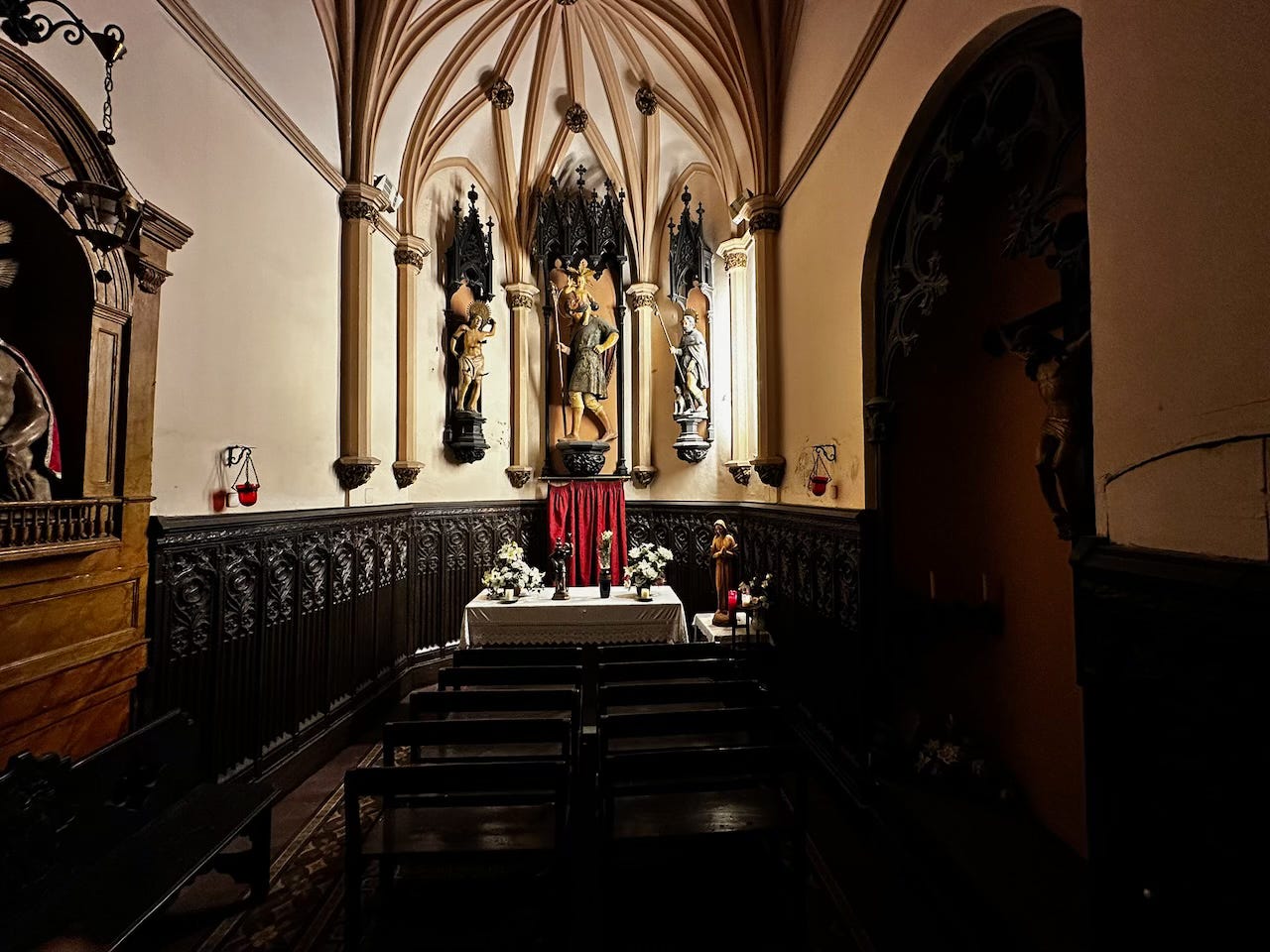
The Chapel of Saint Christopher of Regomir: Barcelona’s Smallest Guardian of Travelers
A quiet Gothic Quarter shrine where medieval faith meets modern travel
Barcelona is a city that rewards curiosity. Yes, there are the unavoidable masterpieces—Gaudí’s stone dreams, the grand avenues, the beaches—but the real Barcelona often reveals itself in much smaller spaces. Sometimes, all it takes is turning down an unassuming street in the Gothic Quarter to stumble upon a place where centuries of belief, movement, and modern life quietly overlap. The Chapel of Saint Christopher of Regomir is one such place.
Tucked away on Carrer del Regomir, just a short walk from the bustle of the cathedral and the port, this modest chapel dates back to 1503. It stands on what was once one of the main entry routes into medieval Barcelona, a threshold between the safety of the city walls and the uncertainties of the road beyond. The choice of patron saint here was no accident. Saint Christopher, protector of travellers, has long been invoked by those setting out into the unknown—on foot, on horseback, and eventually, behind the wheel of a motor vehicle.
The chapel itself is small, almost easy to miss, especially if you’re rushing through the Gothic Quarter, ticking landmarks off a list. But pause for a moment, and it becomes clear why it has endured. Inside, Saint Christopher is traditionally depicted carrying the Christ Child across a river, straining under a weight that symbolises the burden of the world. It’s a fitting image for a city that has always been shaped by movement—by merchants, sailors, migrants, pilgrims, and, today, travellers from every corner of the globe.
What truly sets this chapel apart, however, is not just its age or symbolism, but its role in a living tradition that connects medieval devotion with modern life. Every year on 10 July, the Festa de Sant Cristòfor transforms this quiet corner of the Gothic Quarter into an unlikely gathering point for cars, motorbikes, scooters, and bicycles. Vehicles line up to be blessed for the year ahead, a ritual that began here in 1907 and is considered the first vehicle-blessing ceremony of its kind in Spain. It’s a wonderfully Barcelona moment: ancient faith meeting modern mobility without irony or spectacle.
There is something deeply human about this continuity. Long before engines and asphalt, travellers passed this same spot hoping for protection. Today, the mode of transport has changed, but the impulse remains the same. We still seek reassurance before we set off. We still like the idea that someone—or something—is watching over the journey. Unlike Barcelona’s larger churches, the Chapel of Saint Christopher of Regomir doesn’t overwhelm. It invites quiet reflection rather than awe. It reminds you that history doesn’t always announce itself loudly. Sometimes it survives in a single room, on a narrow street, still performing the same role it did centuries ago.
So when you come to Barcelona, by all means, visit the icons. But also allow yourself to wander. Take a detour through Carrer del Regomir. Stand for a moment outside this small chapel and consider how many journeys have begun, passed by, or been quietly blessed here. In a city defined by movement, the Chapel of Saint Christopher remains one of its most understated guardians—watching travellers come and go, just as it always has.