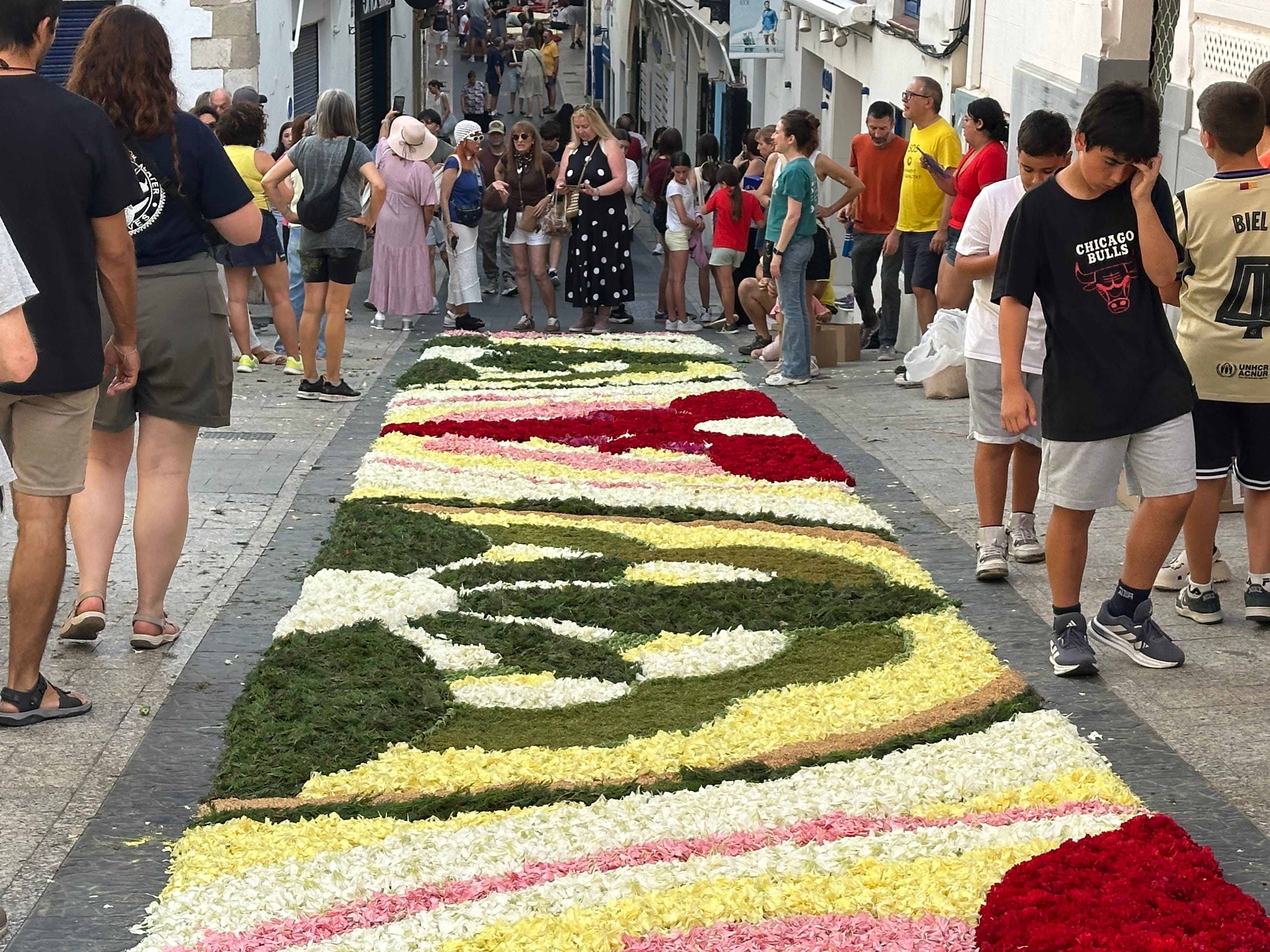
The Flower Carpets of Sitges: A Living Tradition of Corpus Christi
Corpus Christi in Sitges
Today, while wandering through the charming streets of Sitges, I found myself stepping into one of the most beautiful and unique traditions in Catalonia — the floral carpets of Corpus Christi. What began as a casual stop to admire the displays quickly turned into an unforgettable experience filled with colour, fragrance, history, and an extraordinary sense of community spirit.
Every June, the coastal town of Sitges transforms into an open-air work of art during the celebration of Corpus Christi, known locally as Corpus. Streets across the historic centre become covered with elaborate carpets made entirely from flower petals, leaves, seeds, and natural materials. These temporary masterpieces, known as catifes de flors, are among the most iconic cultural traditions in Catalonia and attract visitors from across Spain and beyond.
Walking through Sitges today felt almost surreal. The narrow Mediterranean streets were alive with colour — vivid reds from carnations, deep greens from leaves and moss, brilliant yellows, blues, and whites carefully arranged into intricate geometric patterns, religious symbols, and artistic designs. The scent of fresh flowers filled the warm sea air, while locals and visitors slowly moved through the old town admiring the extraordinary work created overnight.
What makes the tradition especially remarkable is the dedication behind it. Entire neighbourhoods, families, local associations, and volunteers spend countless hours preparing the carpets. Many begin during the night or in the early hours of the morning, carefully placing thousands upon thousands of petals by hand. The result lasts only for a short time before the Corpus Christi procession walks across the carpets later in the day, making the art intentionally temporary and symbolic.
The origins of Corpus Christi itself date back to the 13th century. The feast was officially established by Pope Urban IV in 1264 as a celebration of the Eucharist within the Catholic Church. Over the centuries, processions and decorative traditions spread across Europe, particularly in Spain, Portugal, and parts of Latin America. In Catalonia, flower carpets became closely associated with the celebration and evolved into an important cultural expression that combined religion, art, and local identity.
Sitges has one of the most famous Corpus Christi celebrations in Catalonia, with records of the festival in the town dating back centuries. The floral carpet tradition became especially prominent in the late nineteenth and early twentieth centuries, when Sitges was developing as an artistic and cultural centre. Influenced by Catalan Modernisme and the town’s growing creative spirit, local residents began turning the decoration of streets into a form of artistic competition and community pride.
Today, the event remains deeply connected to local identity. Even in a modern tourist destination like Sitges, the tradition continues to bring generations together. Children help sort flower petals, neighbours collaborate on designs, and artists experiment with increasingly detailed compositions. Despite the festival attracting thousands of visitors, there is still an intimate and authentic feeling to the celebration. As I explored the flower displays today, I noticed how every street seemed to tell a different story. Some carpets featured classic religious imagery, while others incorporated modern artistic patterns or references to Catalan culture. Balconies were decorated with flowers and flags, church bells echoed through the town, and cafés filled with people pausing to admire the temporary beauty surrounding them. One of the most striking aspects of the floral carpets is their impermanence. By evening, many of the carefully arranged designs will have been walked over and slowly disappear. Yet perhaps that is exactly what makes them so meaningful. The tradition celebrates beauty not as something permanent or commercial, but as a shared moment created by a community and experienced together for only a brief time.
Stopping in Sitges today reminded me how powerful local traditions can be. In an age dominated by fast tourism and digital experiences, the Corpus Christi flower carpets remain deeply human — handmade, collaborative, and rooted in centuries of history. They are not simply decorations for a festival; they are expressions of identity, faith, creativity, and collective memory. For a few hours each year, the streets of Sitges bloom into a living canvas. And for anyone fortunate enough to witness it in person, it becomes far more than just a festival — it becomes a memory filled with colour, craftsmanship, and the timeless atmosphere of the Mediterranean.