The Sound of Absence A Night in Sitges for the Processo del Silenci
A Journey Through the Sacred Silence of Catalunya
There is a specific kind of silence that has weight. It isn’t the empty absence of sound; it’s a presence, heavy with expectation and centuries of tradition. I found it last Friday, under the faint glow of the quarter moon, on the winding medieval streets of Sitges.
I had come for the Processo del Silenci, the famous Good Friday procession. This town, normally a vibrant tapestry of beach culture and nightlife, was shedding its colourful skin for a few hours. By 9:30 PM, the atmosphere on the waterfront near El Baluard, the historic defensive wall, was already shifting. The cheerful noise of the evening was replaced by a low murmur, the shuffle of hundreds of feet, and the sharp scent of melting beeswax.
The procession began with a sound that seemed to arise directly from the ancient stones of the town: the deep, muffled, and perfectly syncopated boom of a lone drum. It was the only percussion, and it cut through the air with a primal rhythm, setting the deliberate pace for everything to follow.
The first figures emerged from the shadow of the Parish Church of Sant Bartomeu i Santa Tecla. The sight was immediately striking. Members of the various religious brotherhoods (Confraries) were clad in long, sombre robes. Most evocative were the nazarenos, hooded figures in high, conical hats that tapered into the night sky, their faces obscured. They held tall, flickering candles, and the candlelight was the only illumination as they guided the sacred Pasos.
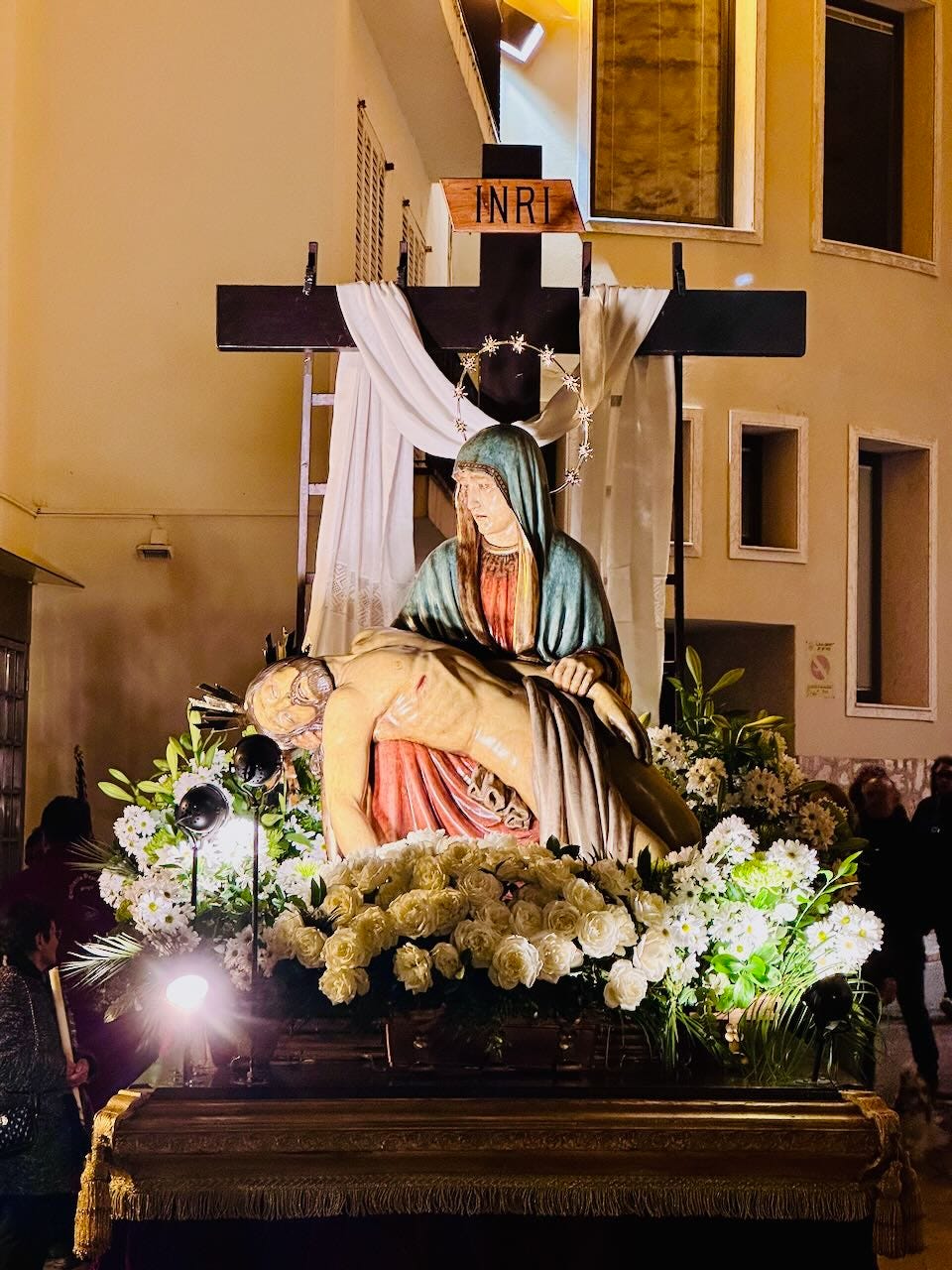
These Pasos are the centrepiece: ornate wooden floats, some centuries old, bearing dramatic sculptures that depict the Passion of Christ. These massive, heavily decorated works of art are not motorised; they are carried by the Costaleros, groups of bearers whose synchronised movements are the result of deep devotion and brutal physical exertion. I watched as they navigated the narrowest alleys, their steady, swaying motion making the statues of the Ecce Homo and the Virgen de los Dolores appear almost to float above the crowd.
Perhaps the most unforgettable moment was standing in the Placa del Cap de la Vila, the historic heart of Sitges. It’s where several streets intersect, and the procession was funnelling through this bottleneck. As the first float entered the square, a hush fell over thousands of people who felt absolute. The only sound was the rhythmic drag of feet, the occasional scrape of a staff, and the soft crackle of wax.
The contrast between the Catalan approach and the louder, music-heavy processions of Andalucia was striking. This silence was the point. It was a space for reflection, mourning, and community. The quiet created a powerful intimacy, drawing everyone—participants and onlookers, locals and curious travellers like myself—into the shared performance.
I managed to capture a few photos, though the low light and the solemn nature of the event demanded subtlety. The images speak to the atmosphere: the silhouette of the hooded bearers, the warm, shifting glow of the candles against the ancient stone facades, and the intricate detail of the Pasos as they passed, just inches from the crowd.
The procession wound its way through the old town before concluding back at the Placa de l’Ajuntament, the square that houses the elegant town hall and sits just steps from the parish church. Here, the final scene was set. The floats were gathered, the drums stopped, and the hundreds of participants stood in an open-air assembly, bathed only in candlelight. In the silence of that historic square, a final prayer was offered, and the atmosphere, so heavy just moments ago, gently dissolved into the collective exhale of the town. It was a perfect, quiet ending to an evening that proved sometimes the loudest message is the one delivered in total silence. Thanks for reading… until next time!